A Week at Hotel Ai Cavalieri: Where Venice's Past Meets the Perfect Bathtub
Hotel Ai Cavalieri has become my default Venice booking. I've stayed here three times now, always in the Junior Suite with Terrace, and each visit reinforces why I keep returning. Venice accommodation tends to disappoint—you're either dealing with tourist-trap hotels near San Marco or residential areas so remote that every outing becomes a navigation exercise. Finding a property that balances authentic historic character with actual comfort is rare enough that I stop looking once I've found one that works.
This most recent stay was seven nights in October. The room has original 18th-century ceiling frescoes, a bathtub positioned to overlook a private terrace, and that detail level throughout that separates genuinely preserved palazzos from renovations that just added some exposed brick and called it historic. The building is Palazzo Marcello Papadopoli Friedenberg, 16th century, converted to a boutique hotel that maintained architectural integrity rather than compromising it for modern convenience.
What keeps me coming back isn't just the room itself but the combination of factors that make Venice stays either functional or frustrating: the private jetty for water taxi access, the location in Castello that's walkable to everything without being overrun, and staff who understand service without performance.
Castello and the Reality of Venetian Geography
Hotel Ai Cavalieri sits in Castello on Calle Borgolocco. What matters: eight minutes walking from Piazza San Marco, seven from Rialto Bridge, in one of Venice's six historic districts that maintains residential character.
Castello extends east from San Marco—major tourist sites mixed with residential pockets where actual Venetians buy groceries. The hotel's location balances both: walkable to landmarks, far enough to avoid the tourist surge that makes San Marco unbearable by 10am.
Walking routes involve bridges and narrow passages—unavoidable in Venice. But routes you learn quickly, and the neighborhood has enough cafés that wrong turns rarely feel wasted. Santa Maria Formosa square nearby provides legitimate neighborhood gathering spot.
Significant advantage: private jetty on the canal. Sounds minor until you've navigated water taxi stops during busy periods. Direct water access for hotel guests eliminates logistical friction.
Hotel Ai Cavalieri
16th-Century Palazzo with Genuine Historical Character
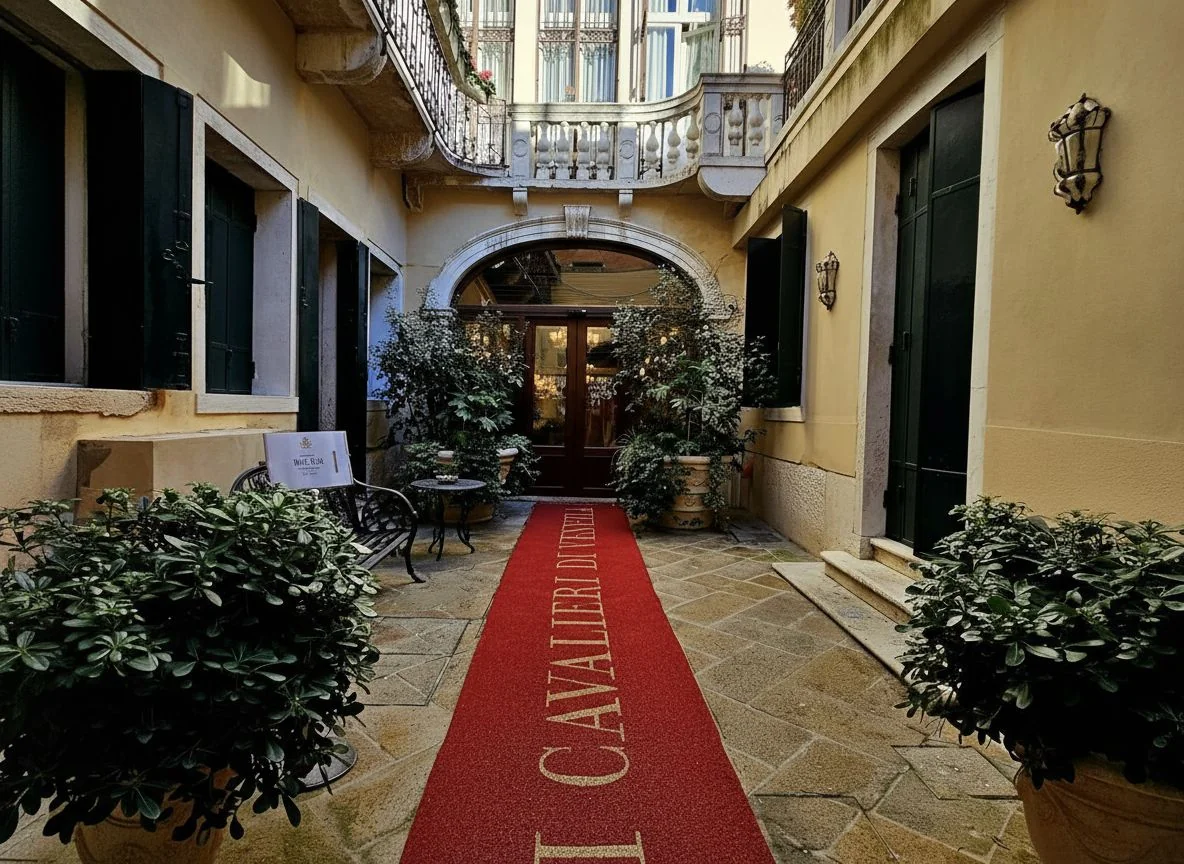
The building is Palazzo Marcello Papadopoli Friedenberg, originally constructed in the 16th century. The entrance sits on a quiet canal-side street in Castello, marked clearly but without the aggressive branding some hotels favor. Check-in happens in a lobby with terrazzo floors, an original Murano chandelier, and antique furniture that fits the space naturally. Staff speak fluent English, know the building's history in detail, and handle arrivals efficiently without performative hospitality.
Arriving by Water (Which You Should Do)
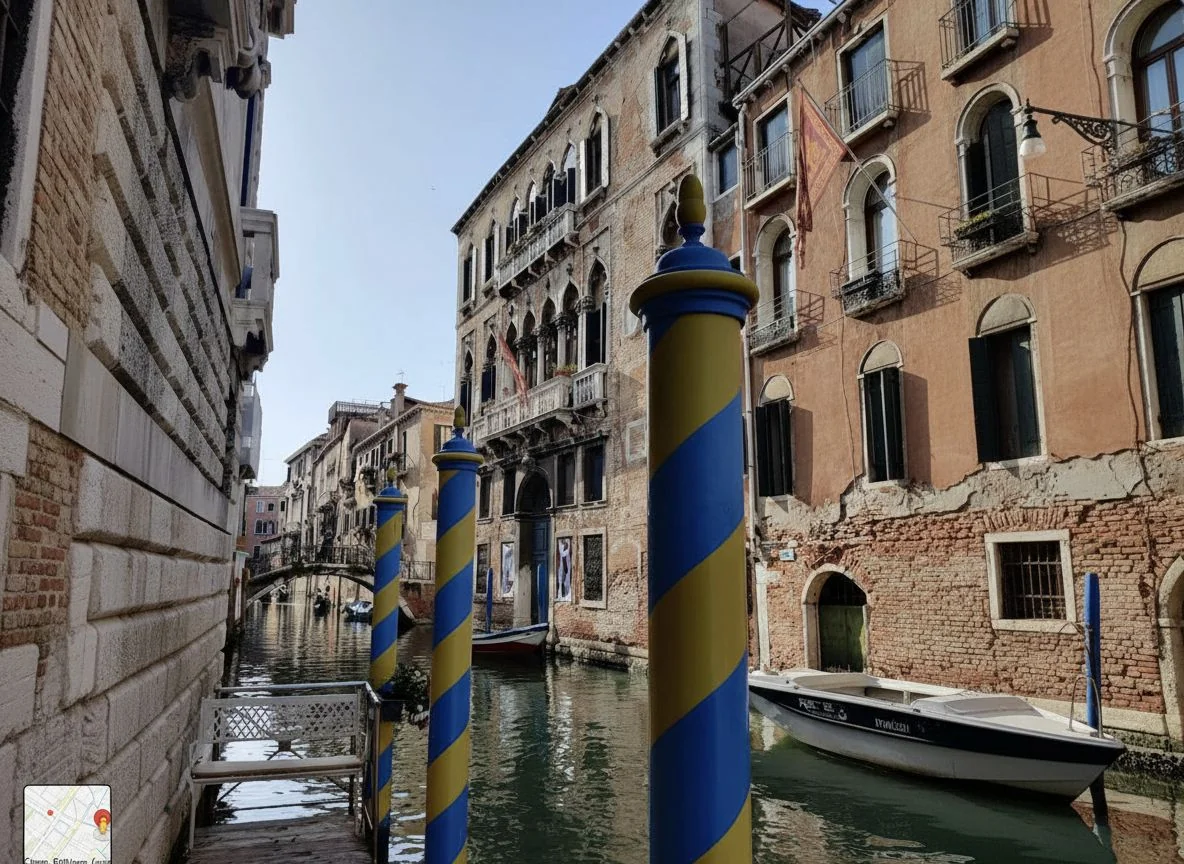
Use the water taxi arrival to the hotel's private jetty. Arriving through the canal system gives immediate context for how Venice functions.
Water taxis wind through progressively narrower canals to the hotel's mooring point. Step directly from boat to entrance platform—no dragging luggage across bridges.
The jetty also serves as departure point for hotel-arranged gondola rides. Location on a quieter canal means you're not surrounded by other gondolas and tour groups.
Dedicated water access means efficiently reaching other Venice areas via water transport without walking to public vaporetto stops. Mattered multiple times when reaching areas across the Grand Canal.
The Junior Suite with Terrace
18th-Century Ceiling Paintings and Strategic Bathtub Placement
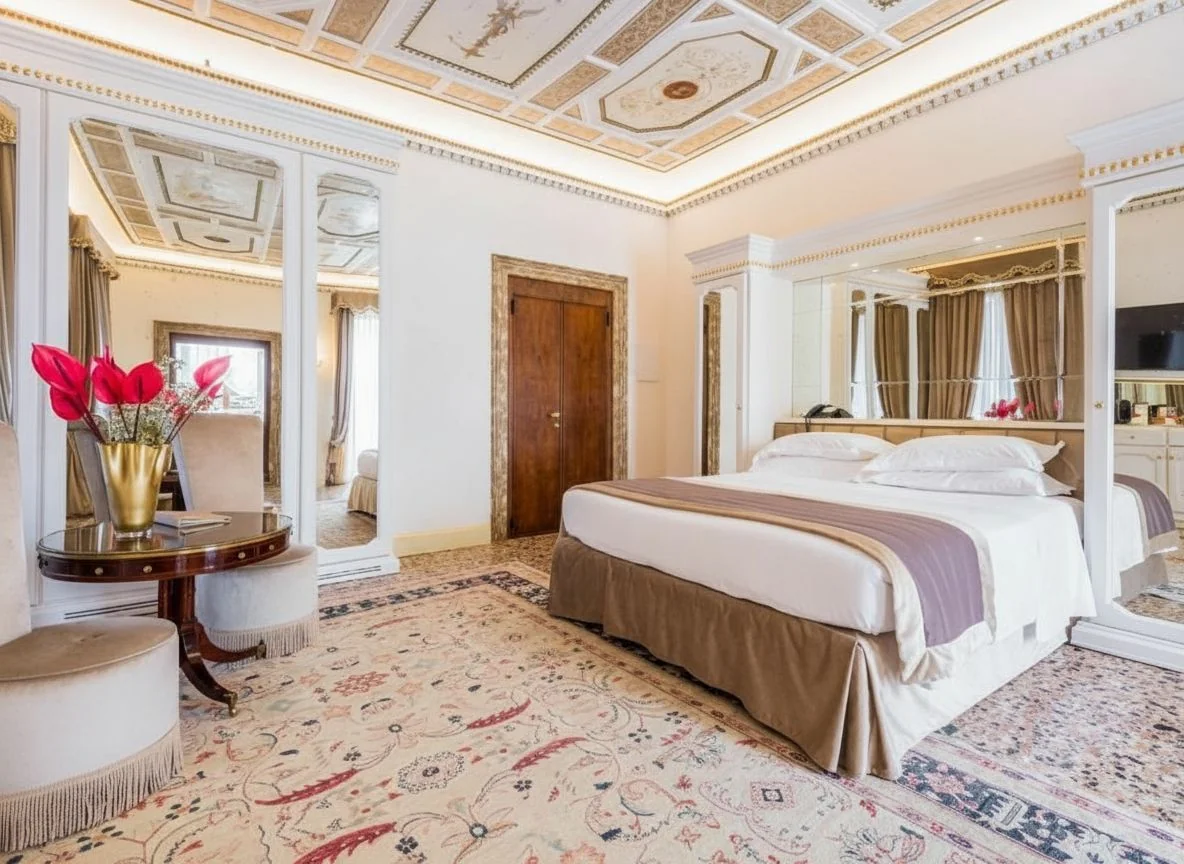
The room measures 28-30 square meters—actual space to unpack and settle in. What makes it exceptional is the preserved architectural details most renovations destroy.
The ceiling features original 1700s frescoes, not reproductions. Actual painted surfaces that survived centuries, faded to muted tones that look better than when first painted. Classical Italian motifs I couldn't specifically identify, but spending a week looking up at them made them familiar.
Authentic terrazzo floors—traditional Venetian technique using marble chips set in mortar. Walking across it barefoot provides tactile connection to the building's age. The Murano chandelier is clearly period-appropriate, with irregular glasswork that distinguishes genuine pieces from reproductions.
Furniture includes actual antiques: writing desk showing centuries of wear, upholstered chairs reupholstered multiple times while maintaining original frames, bed combining antique frame with contemporary mattress. Historic feel without the museum stiffness.
Modern amenities integrated discreetly: television hidden in cabinet, air conditioning vents that don't disrupt ceiling details, reliable wifi, minibar tucked into antique cabinetry.
The Bathtub Situation
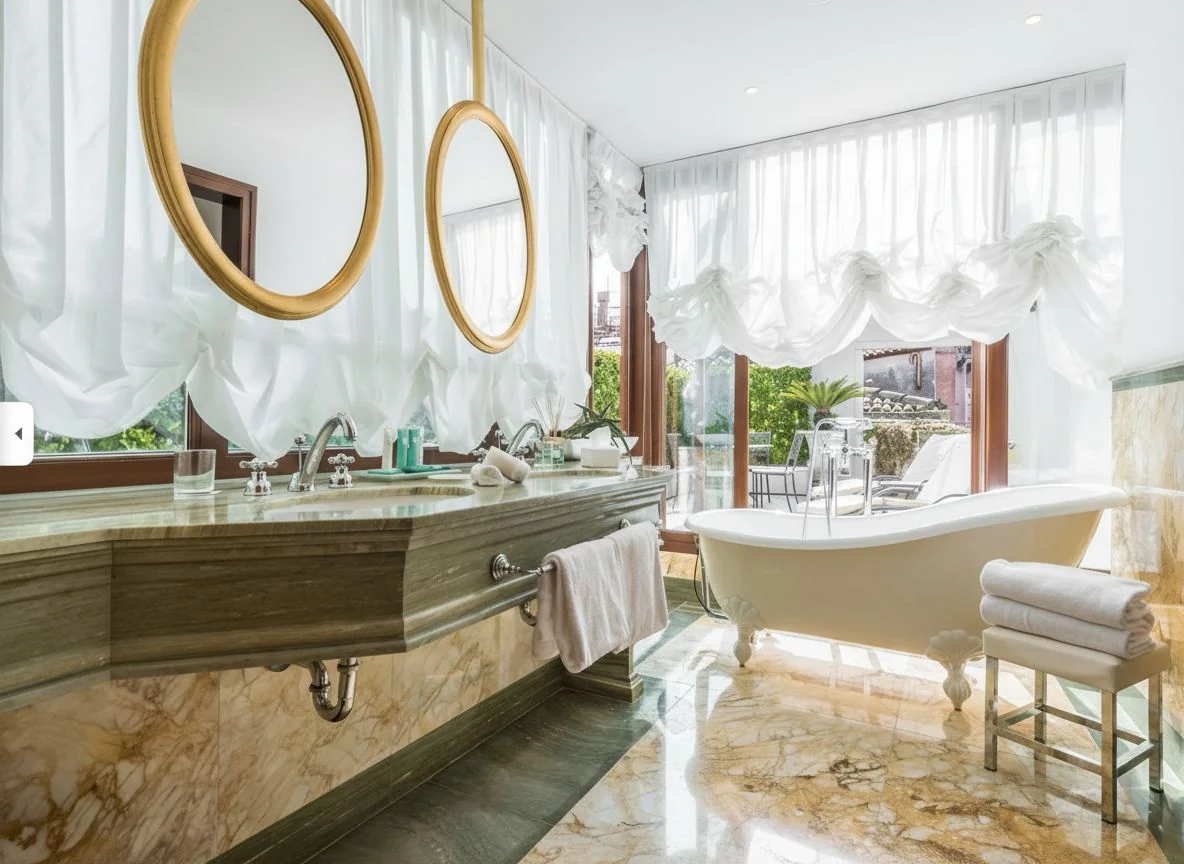
The bathtub placement shows someone actually thought about usage rather than just checking a "bathtub included" box.
Positioned in the room near terrace doors—natural light during day, privacy curtains when needed. You can run a bath while doing other things, and the view while soaking looks directly to the terrace and Venetian roofscape beyond.
Proper deep tub, not shallow European style. Strong water pressure, precise temperature control, efficient drainage. Basic requirements, but enough hotels fail that it's worth noting when one gets it right.
Good bath products—quality Italian, smell natural rather than synthetic. Extra towels provided without requesting.
Used this bathtub daily, usually early evening after walking Venice's distances. Drawing a bath, opening terrace doors for air circulation, soaking while watching light change across rooftops—genuinely looked forward to it from 4pm onward.
The Terrace
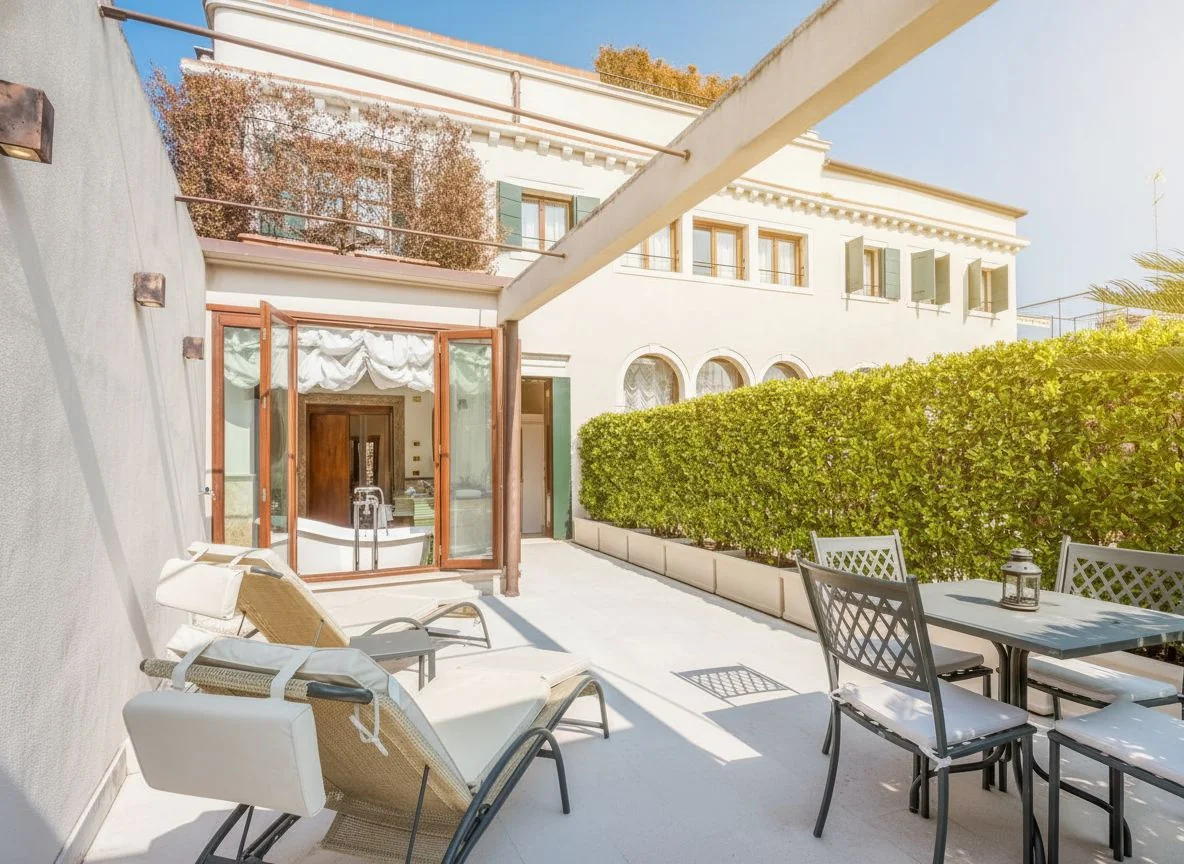
The private terrace provides what you actually need in Venice: outdoor space that's yours alone in a city where such space is rare. Proper seating, a table, room to move around comfortably. Views across Venetian rooftops rather than directly onto landmarks—layered terra cotta tiles, chimneys, glimpses of canal water between buildings, distant domes.
I used this terrace daily, mornings with coffee and evenings before or after bathing. October weather made outdoor sitting comfortable most daylight hours. Good afternoon light, sunset color shifts across rooftops. Practically speaking, having outdoor access from your room matters in Venice. The city's density feels oppressive, and stepping outside without leaving your room provides necessary psychological space.
The terrace also improved the bathtub experience—opening those doors while bathing created air flow that prevented steamy stuffiness. Enhanced the practical function significantly.
Ai Reali Wellness Spa Access
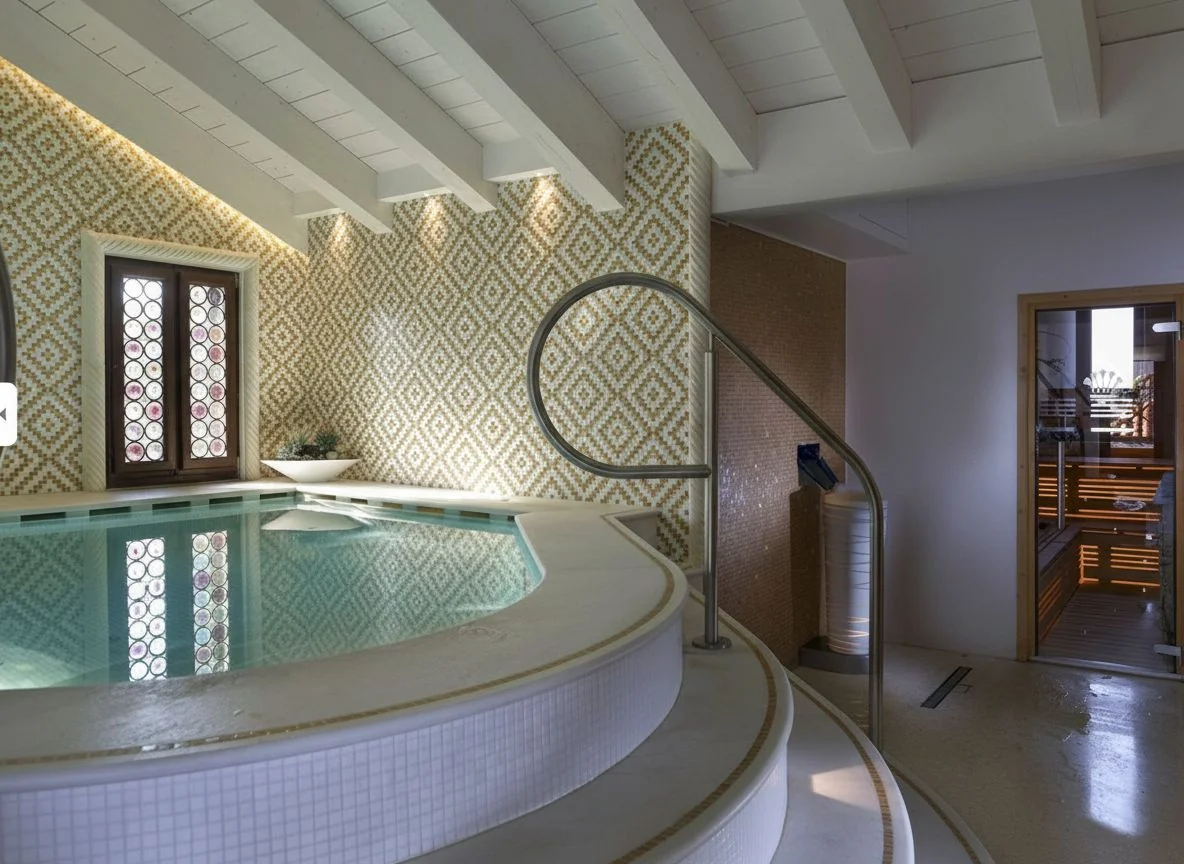
Cavalieri guests have access to Ai Reali Wellness Spa at the sister property, about a ten-minute walk away. Indoor jacuzzi, treatment rooms, wellness facilities.
I visited three times during the week, primarily for the jacuzzi. Dark ambient lighting that normally feels overwrought but worked here. The jacuzzi is substantially larger than typical hotel hot tubs, with proper jet positioning and consistent temperature control.
The walk takes you through residential Venice streets most tourists don't see. Not Instagram picturesque, but useful for observing how the city functions beyond tourism. Route is straightforward—learned it by the second visit.
The spa offers various treatments at reasonable Venice prices. Staff was professional without aggressive upselling. Having both the in-room bathtub and spa jacuzzi as options felt legitimately luxurious after long exploration days.
Reserve spa access through the concierge when you arrive. Evening jacuzzi slots book quickly.
Breakfast and Dining Arrangements
No full restaurant on-site, but breakfast service happens in a formal dining room with ceiling frescoes and period furniture. Continental offerings plus made-to-order eggs, proper Italian espresso drinks, canal views through windows.
The concierge provides restaurant recommendations and handles reservations. Recommendations proved reliable—actual local establishments, not tourist traps. Castello has legitimate dining options within walking distance.
Guests can dine at Ristorante Alle Corone at Hotel Ai Reali. I ate there twice—competent traditional Venetian dishes, quality ingredients, attentive service without stuffiness. Viable option for nights when you don't want to navigate restaurant hunting.
Room includes well-stocked minibar and tea/coffee service. Having good in-room coffee for early mornings mattered more than anticipated.
Service and Practical Details
Staff balance warmth with efficiency. Helpful without being intrusive, knowledgeable without condescension.
The 24-hour reception handles requests at odd hours. The concierge understands Venice's complexity—restaurant reservations, transportation, routing suggestions that save time.
Daily housekeeping was thorough without disturbing established order. They clean around a week-stay setup rather than reorganizing. Extra towels appeared without requesting. Minibar restocked promptly.
The hotel provides detailed arrival instructions with photos of landmarks and turns. They called morning of arrival to confirm water taxi timing and provide driver instructions.
Staff English fluency is excellent. They know the building's history beyond basic tourism facts.
Getting Around from This Location
Castello location provides walking access to major sites while maintaining distance from densest crowds. Piazza San Marco: eight minutes walking. Rialto Bridge: seven minutes. Actual times, not exaggerated marketing.
Santa Maria Formosa square nearby hosts a small morning market and cafés frequented by residents. Querini Stampalia museum is two minutes away—quality cultural option most tourists miss.
Water taxi access through the jetty simplifies reaching areas requiring complicated walking routes. Used this multiple times for Grand Canal restaurants and a Murano trip.
Walking routes involve bridges and narrow passages—unavoidable in Venice. But routes are logical, learned quickly. Neighborhood has sufficient activity that getting lost doesn't strand you in empty residential areas.
Location works for first-time visitors (close to major sites) and repeat visitors (residential character, access to less touristy areas).
Booking and Practical Considerations
**Room Selection:** Request upper floors if available. The building is five floors, and higher rooms get better natural light and rooftop views.
**Arrival Logistics:** Use the water taxi service to the hotel's private jetty. The hotel provides exact instructions for water taxi drivers—forward these to your taxi service when booking.
**Spa Access:** Reserve jacuzzi time through the concierge when you arrive. Evening slots book quickly. The walk to Ai Reali takes about ten minutes through quiet streets.
**Dining:** Make dinner reservations 2-3 days ahead. The concierge handles this efficiently and secures better times than booking yourself. For breakfast at the hotel, arrive before 9am for quieter service.
**Pack Light:** Venetian hotels mean stairs and bridges. Even with the jetty access, manageable luggage matters. The room has adequate storage for a week's worth of clothing.
Three stays at Hotel Ai Cavalieri have established it as my default Venice accommodation. I stop looking at other options because I know what I'm getting: a 16th-century palazzo that maintained its architectural integrity, a bathtub positioned to actually enhance the room experience, a terrace that provides necessary outdoor space, and staff who understand service without performance.
The Junior Suite with Terrace delivers that increasingly rare hotel experience where the room itself becomes part of the trip. Drawing a bath at sunset, sitting on the terrace with morning coffee, falling asleep looking up at 18th-century ceiling paintings—these became rituals rather than incidental details.
Venice has countless accommodation options claiming historic authenticity and luxury amenities. Most compromise somewhere—authentic building but terrible bathrooms, or modern comfort but sanitized of character. Hotel Ai Cavalieri delivers both accurately, which places it in a smaller category of properties that match their marketing.
I've recommended this property to multiple people planning Venice trips. It's now my reference point for evaluating other Venetian hotels, which is probably the most useful endorsement I can offer.
Written by Sophie
Luxury travel enthusiast exploring Europe's most characterful hotels, always in search of historic properties that balance preservation with the kind of bathtub that makes you rethink your evening plans.
Read more about the blogger →Explore More European Destinations
Discover more cities and their best hotels with private bathtubs and jacuzzis.
View All Articles