The Westin Hamburg: A Bathtub Overlooking the Elbe, Inside an Architectural Masterpiece
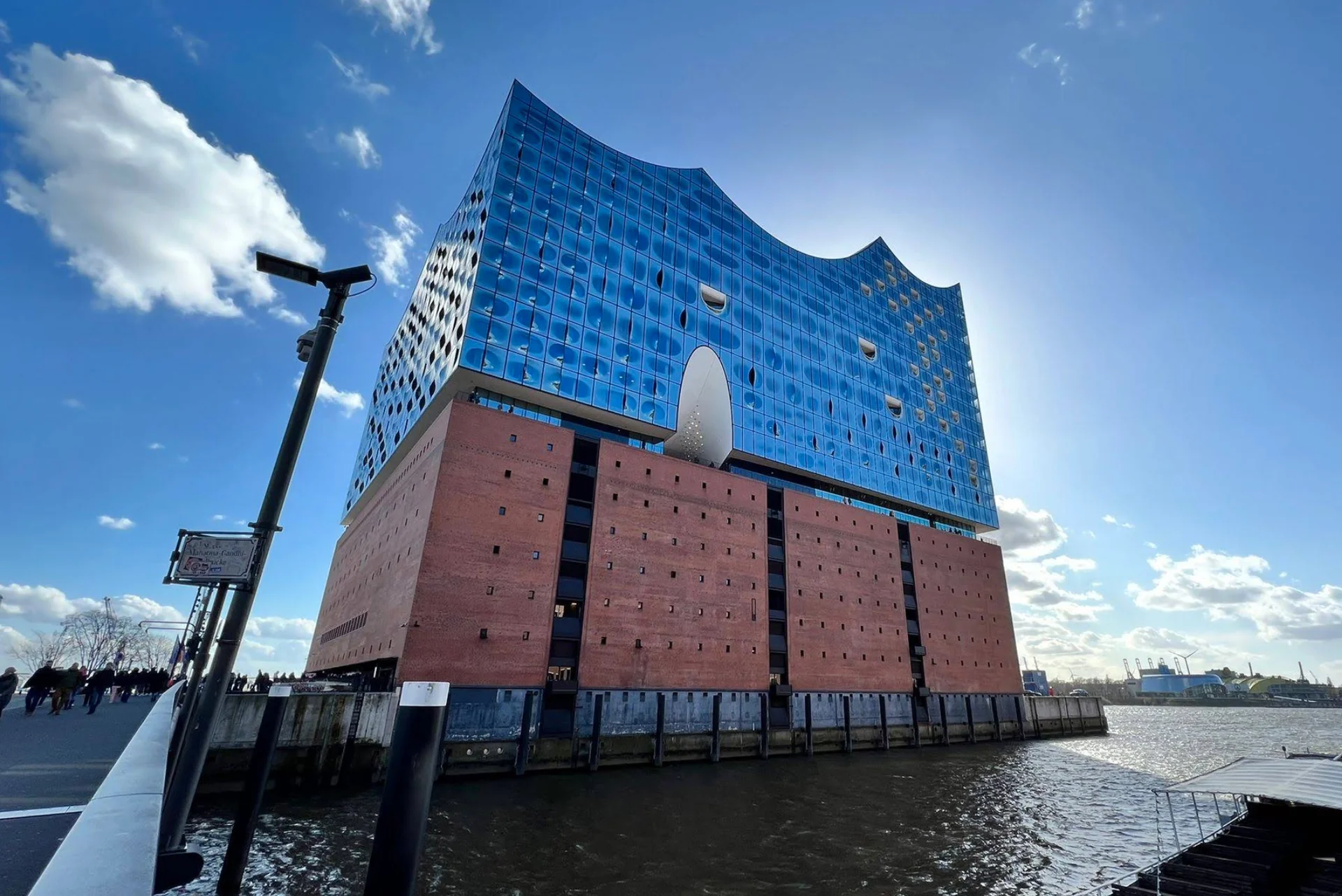
Some hotels are places to sleep. Others are destinations themselves. The Westin Hamburg Elbphilharmonie falls into the second category, though not in the way you might expect. Yes, it's a luxury hotel with excellent rooms and service. But what makes it remarkable is its location: occupying the upper floors of the Elbphilharmonie, Herzog & de Meuron's architectural statement that transformed Hamburg's harbor.
I booked a stay here specifically to attend Eric Lu's piano recital in the concert hall below. The hotel's integration with the Elbphilharmonie means you're not just near a concert venue—you're inside it. The building's glass wave structure, perched atop a repurposed 1960s warehouse, creates a hotel experience unlike anything else I've encountered.
The King Room with water view delivered exactly what I wanted: a spacious bathtub positioned before floor-to-ceiling windows that frame the Elbe River. But the real revelation was how the architecture itself became part of the stay. Every view, every corridor, every detail reflects the building's dual identity as both concert hall and hotel. This isn't a hotel that happens to be near a landmark. It's a hotel that is the landmark.
Hamburg's HafenCity and the Elbphilharmonie's Impact
Hamburg's HafenCity district represents one of Europe's largest urban development projects, transforming former port warehouses into a mixed-use neighborhood that blends historic brick architecture with contemporary glass structures. The Elbphilharmonie anchors this transformation, both literally and symbolically.
The building sits on the Elbe River's edge, visible from across the water and from much of central Hamburg. Its location in HafenCity puts you within walking distance of the Speicherstadt warehouse district (UNESCO World Heritage), the harbor, and Hamburg's city center. The area feels simultaneously industrial and refined—working port infrastructure alongside luxury residences, offices, and cultural institutions.
Getting to the hotel requires navigating HafenCity's pedestrian bridges and walkways. The Elbphilharmonie Plaza, a public viewing platform, sits between the brick base and glass structure, accessible to everyone. This public integration means the building functions as both private hotel and public space, which creates an interesting dynamic during your stay.
Hamburg itself rewards exploration. The city's relationship with water—canals, the Alster lakes, the Elbe—defines its character. The Westin's position on the Elbe provides constant water views, but also connects you to Hamburg's maritime identity. You're staying in a building that acknowledges the city's port history while pointing toward its future.
The Westin Hamburg Elbphilharmonie
Architecture as Experience
The Westin Hamburg occupies floors 9 through 20 of the Elbphilharmonie, with the concert halls, restaurants, and public spaces occupying the lower levels. This vertical integration means you're not just staying near a concert hall—you're staying inside one of the most acoustically advanced buildings ever constructed. Herzog & de Meuron's design creates a building that functions as both architectural statement and functional space. The glass wave structure, with its undulating facade and circular window indentations, reflects light differently throughout the day. From inside, these windows frame views of the Elbe, the harbor, and Hamburg's skyline in ways that standard hotel architecture can't replicate. The hotel itself operates as a standard Westin property—Marriott Bonvoy benefits apply, Heavenly Beds, standard luxury hotel amenities. But the building elevates the experience beyond typical chain hotel stays. The architecture becomes part of your stay in ways that feel intentional rather than accidental. I stayed here specifically for a concert, which is probably the ideal use case. But even without that purpose, the building's design and the quality of the rooms make it worth booking. The King Room with water view delivers on its promise: actual water views, spacious layout, and that bathtub positioned to maximize the river panorama.
King Room with Water View: The Bathtub That Justifies the Stay
Elbe River Views from Every Angle
The King Room with water view occupies a corner position in the building, with windows on two sides framing the Elbe River and Hamburg's harbor. The room follows Westin's standard design language: clean lines, neutral tones, quality materials. Space is generous by European hotel standards, and the floor-to-ceiling windows create a sense of openness. The bed is Westin's Heavenly Bed, and soundproofing is effective despite being inside an active concert hall building.
The River-View Bathtub
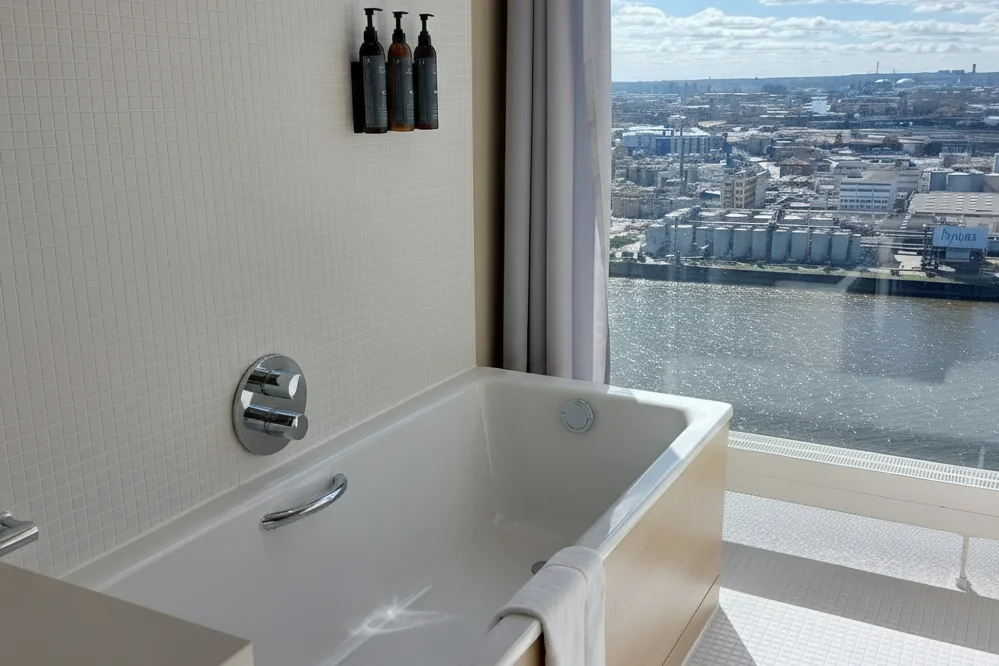
The bathtub in the King Room with water view is positioned directly before the floor-to-ceiling windows, creating a bathing experience that feels almost suspended above the Elbe. This isn't a bathtub with a view—it's a bathtub that makes the view the primary feature.
The tub itself is well-sized, properly deep, with good water pressure and temperature control. Standard hotel bathtub functionality, executed competently. But the positioning transforms it from functional amenity to experience. You're soaking while looking over one of Europe's major rivers, watching ships navigate the harbor, seeing Hamburg's skyline change as daylight shifts to evening.
The windows provide unobstructed views because the building's design places the hotel floors high enough above the surrounding structures. You're not looking at neighboring buildings or competing for sightlines. The water and the city spread out below in a way that feels expansive rather than constrained.
I used the bathtub multiple times during my stay, and each time the view felt like the main event. The combination of hot water, comfortable positioning, and that river panorama creates a specific kind of relaxation that goes beyond standard hotel amenities. This is what you're paying for with the water view room category—not just a room with windows, but a room where the windows frame an experience.
The Building Itself: Architecture as Destination
The Elbphilharmonie represents Herzog & de Meuron's approach to adaptive reuse and contemporary architecture. The base is a 1960s warehouse, Kaispeicher A, which stored cocoa, tea, and tobacco. The architects preserved this brick structure and placed their glass wave design on top, creating a building that acknowledges Hamburg's port history while establishing a new architectural language.
The glass facade, with its undulating curves and circular window indentations, reflects light differently throughout the day. From inside, these windows create unique framing of the views—not standard rectangles but organic shapes that respond to the building's form. The effect feels intentional rather than decorative, as if the architecture itself is part of the view.
Walking through the hotel's corridors, you're constantly aware of the building's structure. The curves, the way light enters through those distinctive windows, the views that change as you move through different parts of the building. This isn't a hotel where you forget about the architecture once you're inside. The architecture is the experience.
The Plaza, the public viewing platform between the brick base and glass structure, provides 360-degree views of Hamburg. It's accessible to everyone, which means hotel guests share the space with tourists and locals. This public integration creates an interesting dynamic—you're staying in a private hotel room, but the building itself functions as public infrastructure.
The Elbphilharmonie Concert Hall
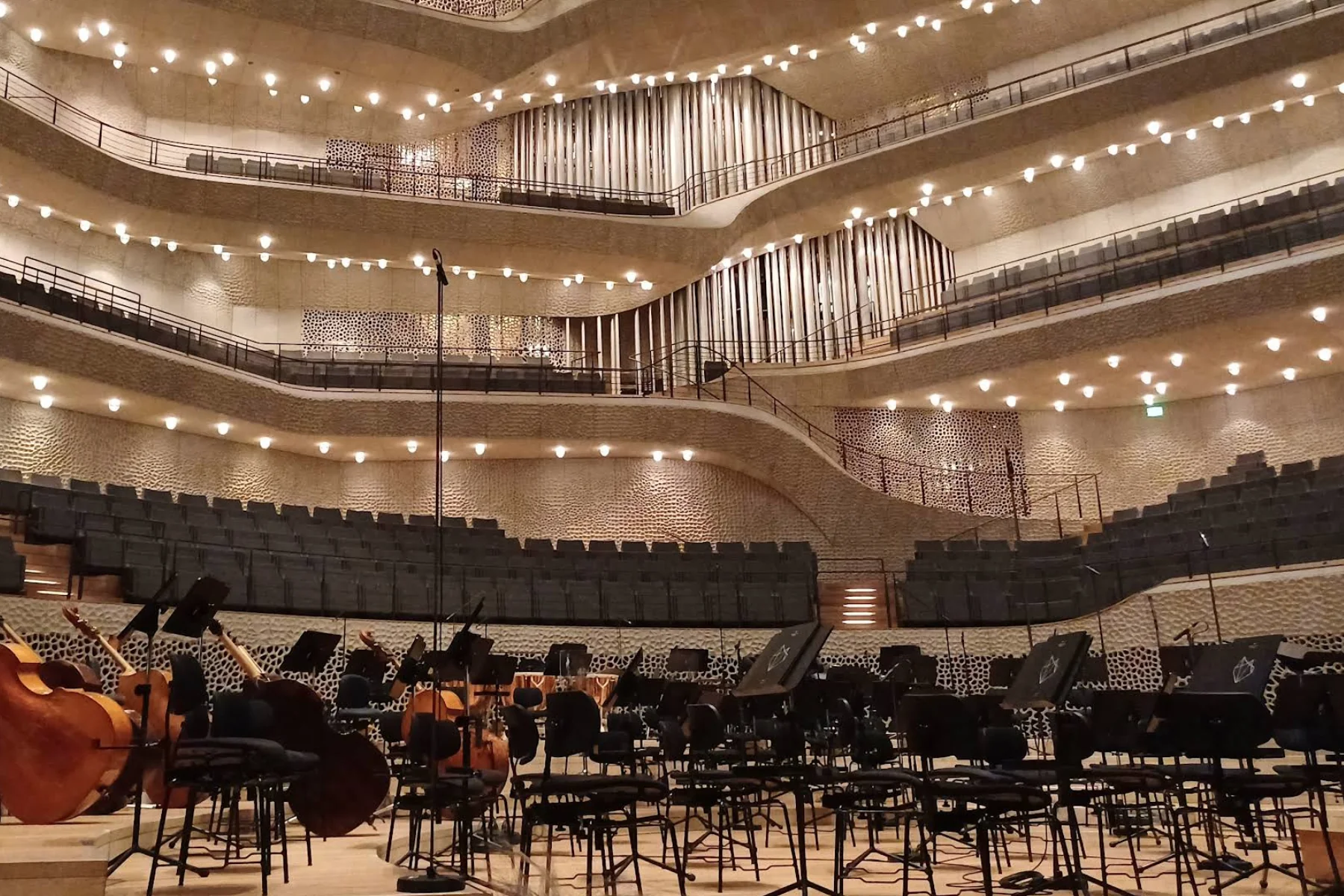
I booked this stay specifically to attend Eric Lu's piano recital in the Elbphilharmonie's Grand Hall. The concert experience justified the entire trip, but staying in the hotel above the hall added a dimension I hadn't anticipated.
The Grand Hall seats 2,100 people in a vineyard-style configuration, with seats surrounding the stage on all sides. The hall's acoustic design, developed by Yasuhisa Toyota, creates sound quality that's genuinely remarkable. Every note, every pause, every resonance feels precisely calibrated. The architecture serves the music in ways that standard concert halls can't match.
Eric Lu's performance of Chopin and Schumann demonstrated the hall's capabilities. The piano's sound filled the space without feeling overwhelming, and the quiet passages maintained clarity even in the upper tiers. This is what the Elbphilharmonie was designed for—not just hosting concerts, but creating acoustic experiences that elevate the music.
Staying in the hotel above the hall means you're part of the building's dual identity. During the day, it's a hotel. In the evening, it transforms into a concert venue. The transition feels seamless, as if the building was always meant to function this way. Walking from your room to the concert hall via the building's internal connections creates a sense of continuity that staying in a separate hotel couldn't provide.
The Elbphilharmonie hosts over 300 concerts annually, covering classical, jazz, world music, and contemporary performances. If you're booking the hotel specifically for a concert, you're choosing the right accommodation. But even without that purpose, the building's integration of hotel and concert hall creates an experience worth seeking out.
Bar and Dining: Views and Quality
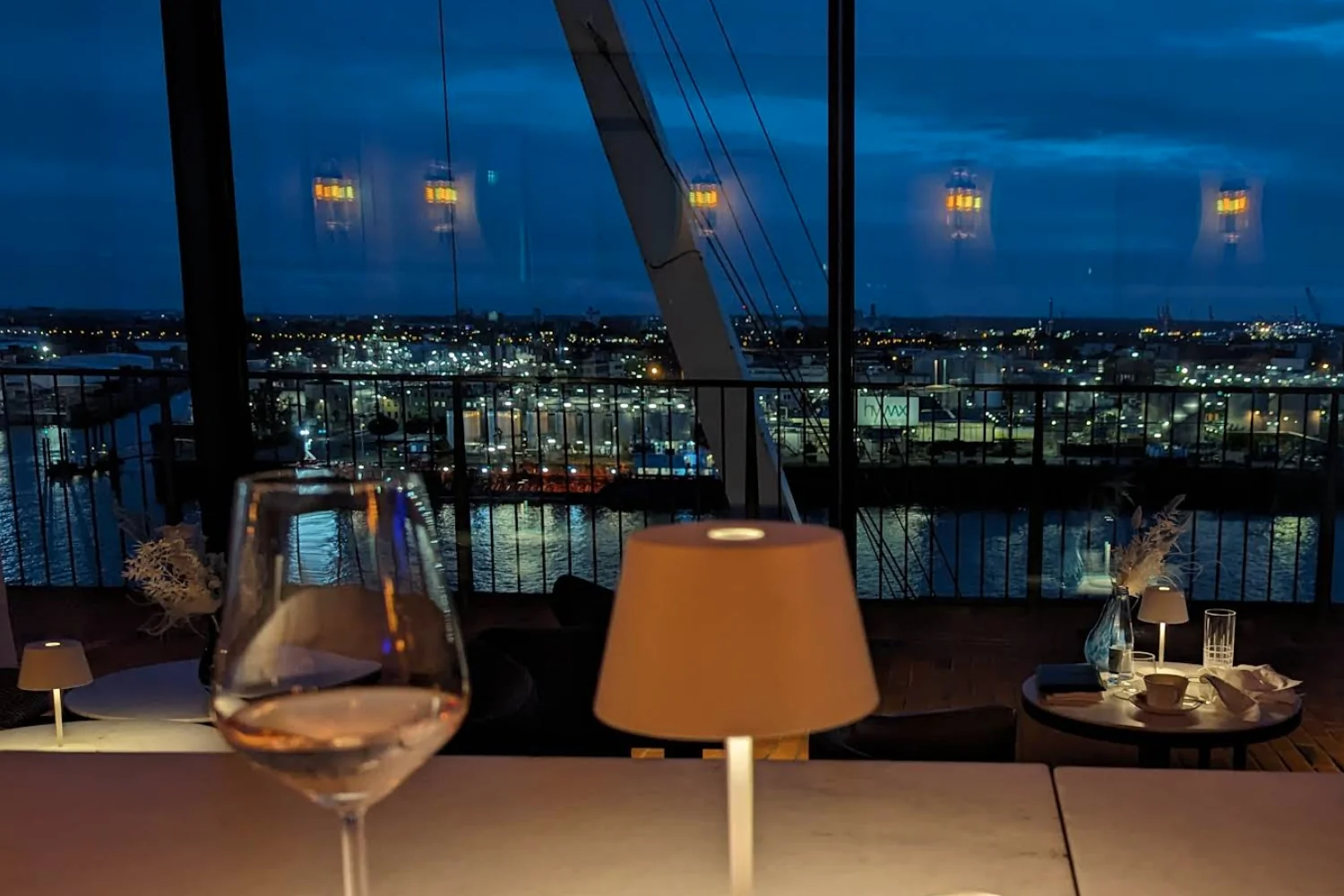
The hotel's bar occupies a prime position within the building, with floor-to-ceiling windows framing Hamburg's skyline and the Elbe River. The space feels integrated with the architecture—those distinctive circular window indentations create unique framing of the views, and the lighting responds to the building's glass facade.
The bar itself functions as both hotel amenity and destination. The drinks are well-executed, the service professional without being overly formal, and the views justify the premium pricing. This isn't a hotel bar you use because it's convenient—it's a bar you seek out because the combination of quality drinks and those views creates an experience worth the cost.
I spent an evening here before the concert, watching Hamburg transition from daylight to evening illumination. The city's lights reflected in the Elbe, and the building's glass facade created its own lighting effects as the sun set. The bar's positioning within the Elbphilharmonie means you're experiencing the architecture while enjoying a drink, which elevates the experience beyond standard hotel bar visits.
The hotel's restaurant options include both casual and fine dining, all benefiting from the building's views and design. I didn't dine extensively during my stay, but the breakfast service was comprehensive and the quality matched the hotel's positioning. The building's architecture enhances even the most routine hotel services.
Spa and Wellness
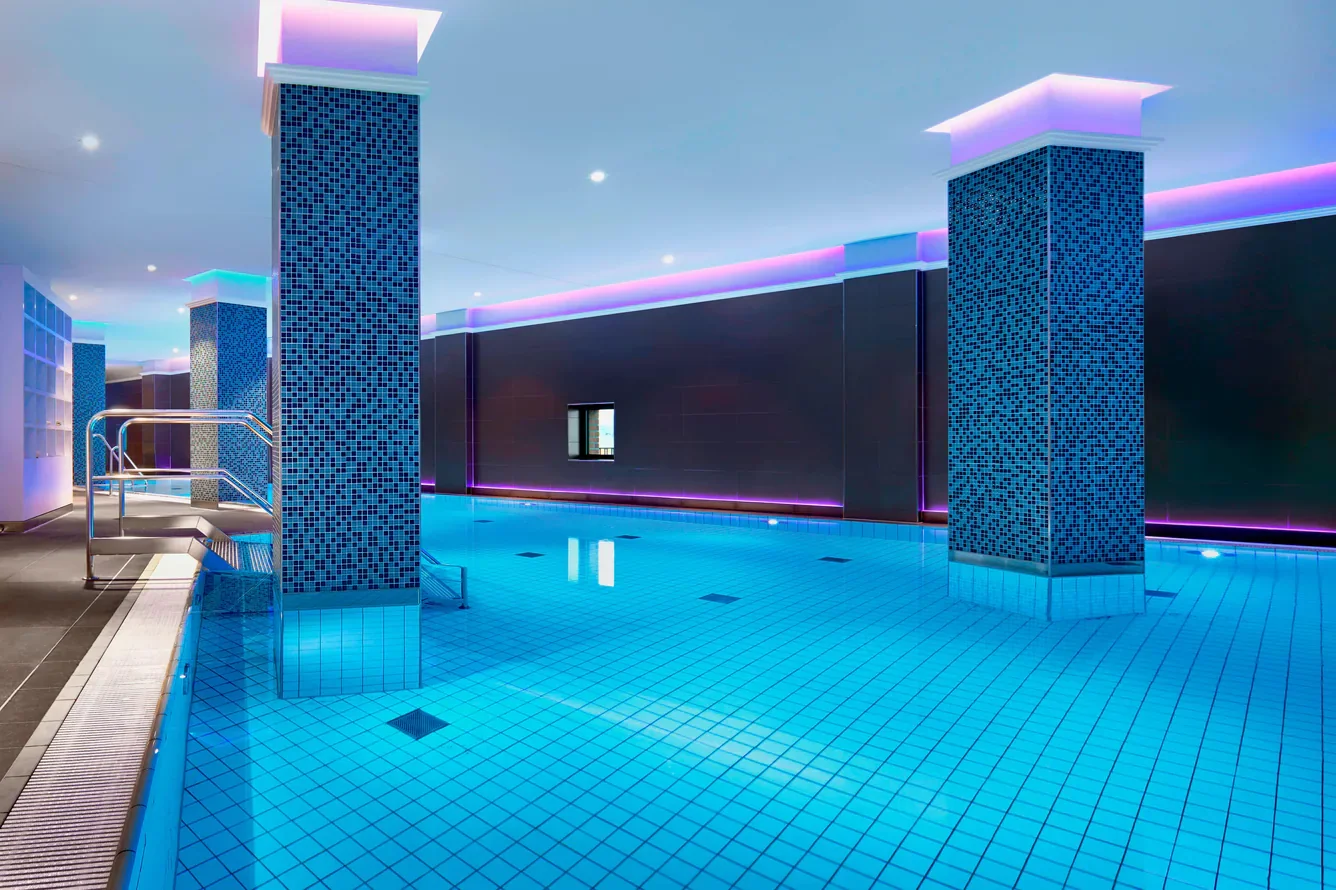
The hotel's spa includes a substantial indoor pool, fitness facilities, and treatment rooms. The pool is large and well-maintained, and during my stay, few people were using it. The spa operates as you'd expect from a Westin property—professional service, quality facilities, standard luxury hotel wellness offerings.
Why This Hotel Works: Architecture Meets Function
The Westin Hamburg Elbphilharmonie succeeds because it doesn't try to compete with the building's architecture—it embraces it. The hotel rooms, the bar, the spa, all function within a structure that was designed for multiple purposes. This integration creates an experience that goes beyond typical luxury hotel stays.
The King Room with water view delivers on its promise: actual water views, spacious layout, and that bathtub positioned to maximize the river panorama. The room quality matches the building's architectural ambition, which means you're not staying in a landmark building with substandard accommodations. Everything functions at the level the architecture suggests.
The hotel's integration with the Elbphilharmonie concert hall creates a specific use case: booking for a concert transforms your stay into a complete experience. But even without that purpose, the building's design and the quality of the rooms make it worth booking. The architecture becomes part of your stay in ways that feel intentional rather than accidental.
Hamburg itself rewards exploration, and the hotel's position in HafenCity provides access to the city's harbor, historic warehouse district, and central areas. The location works for both business and leisure travel, and the building's prominence means you're always oriented—you can see the Elbphilharmonie from much of central Hamburg, which makes navigation straightforward.
This isn't a hotel for every trip to Hamburg. The rates reflect the building's status, and the location in HafenCity trades some central convenience for architectural significance. But if you're interested in staying inside a building that represents contemporary architecture at its best, and you want a room with a bathtub that frames the Elbe River, this is the place to book.
Written by Sophie
Luxury travel enthusiast who values reliable accommodation that consistently delivers on space, bathtub quality, and practical facilities over trendy locations.
Read more about the blogger →Explore More European Destinations
Discover more cities and their best hotels with private bathtubs and jacuzzis.
View All Articles